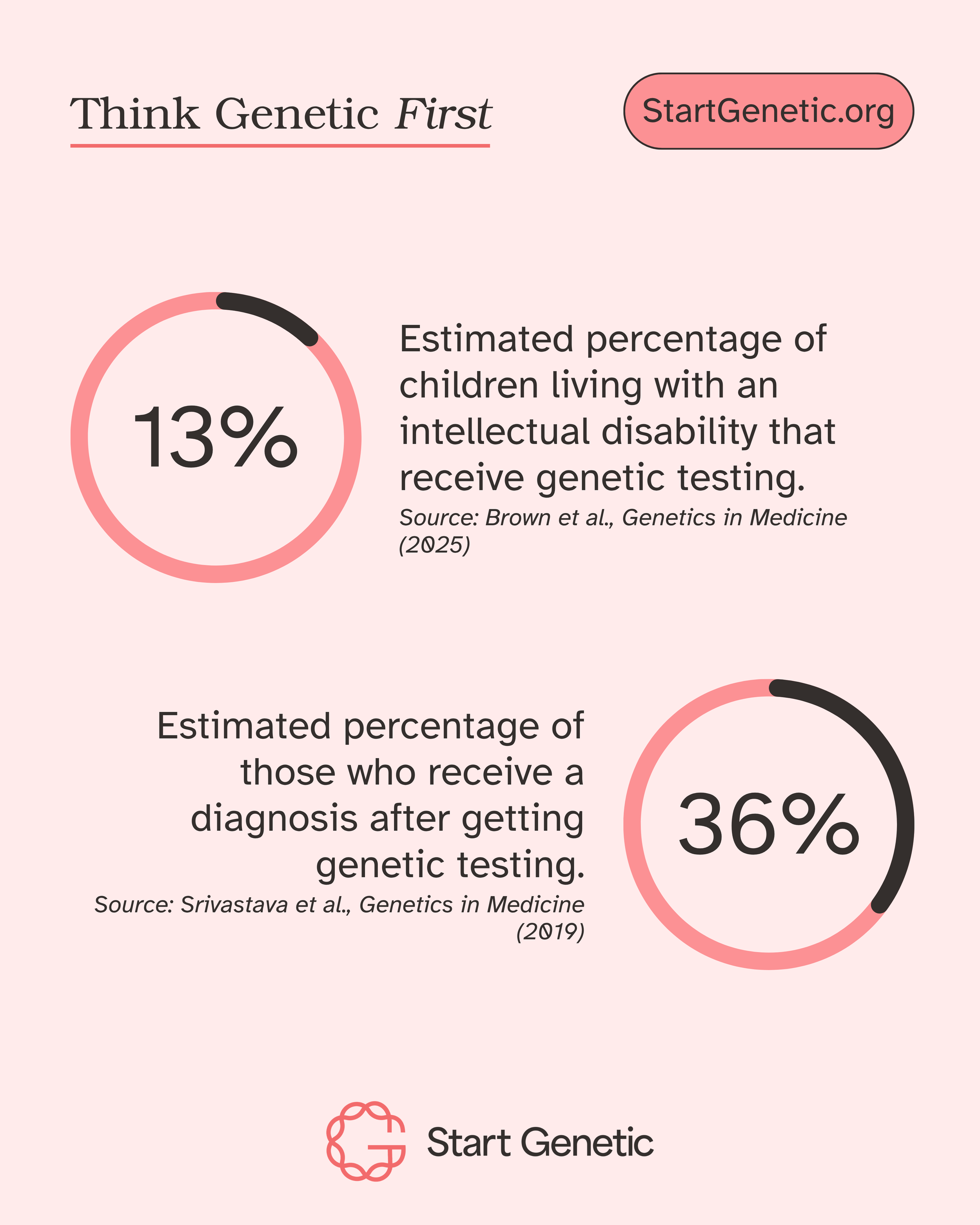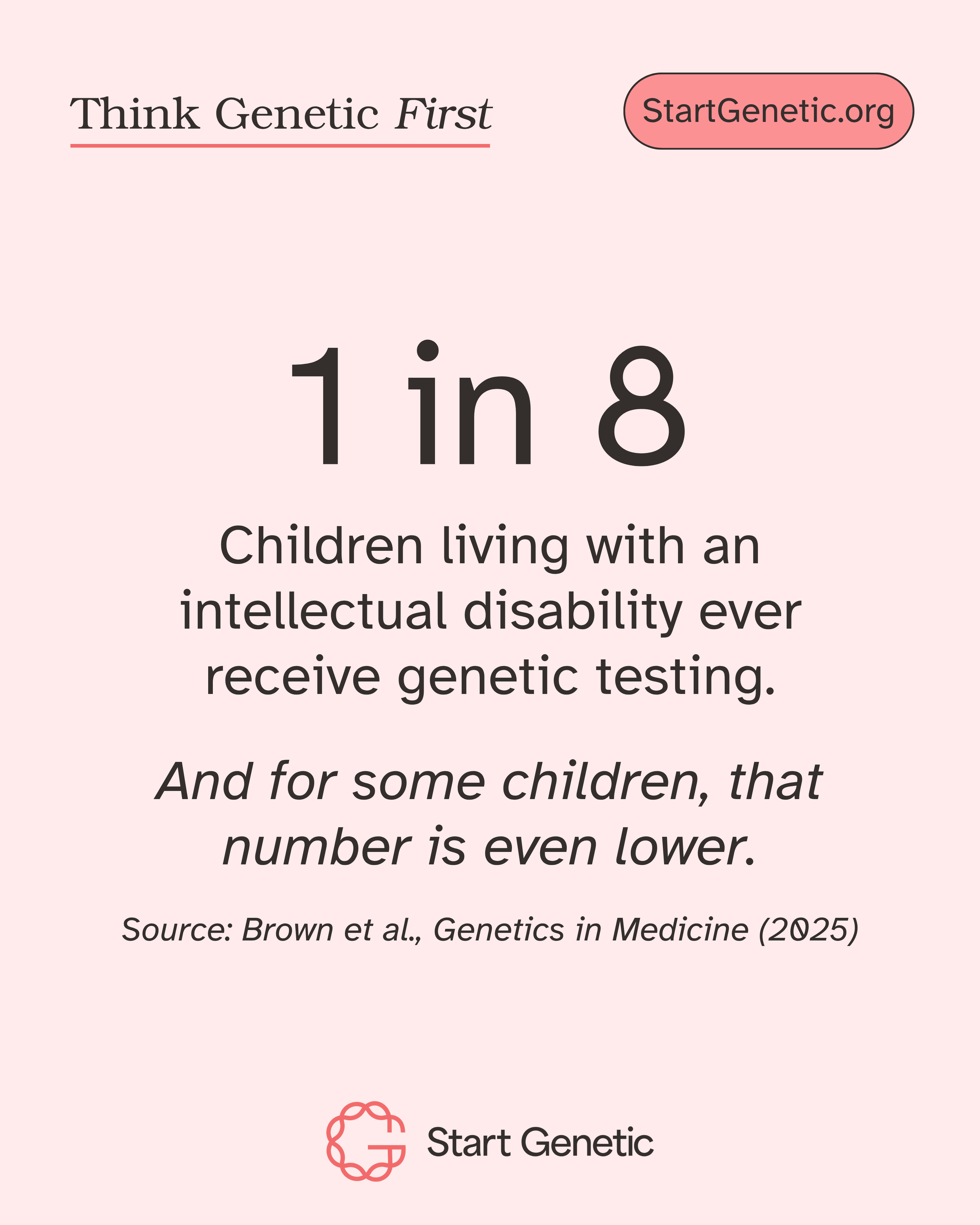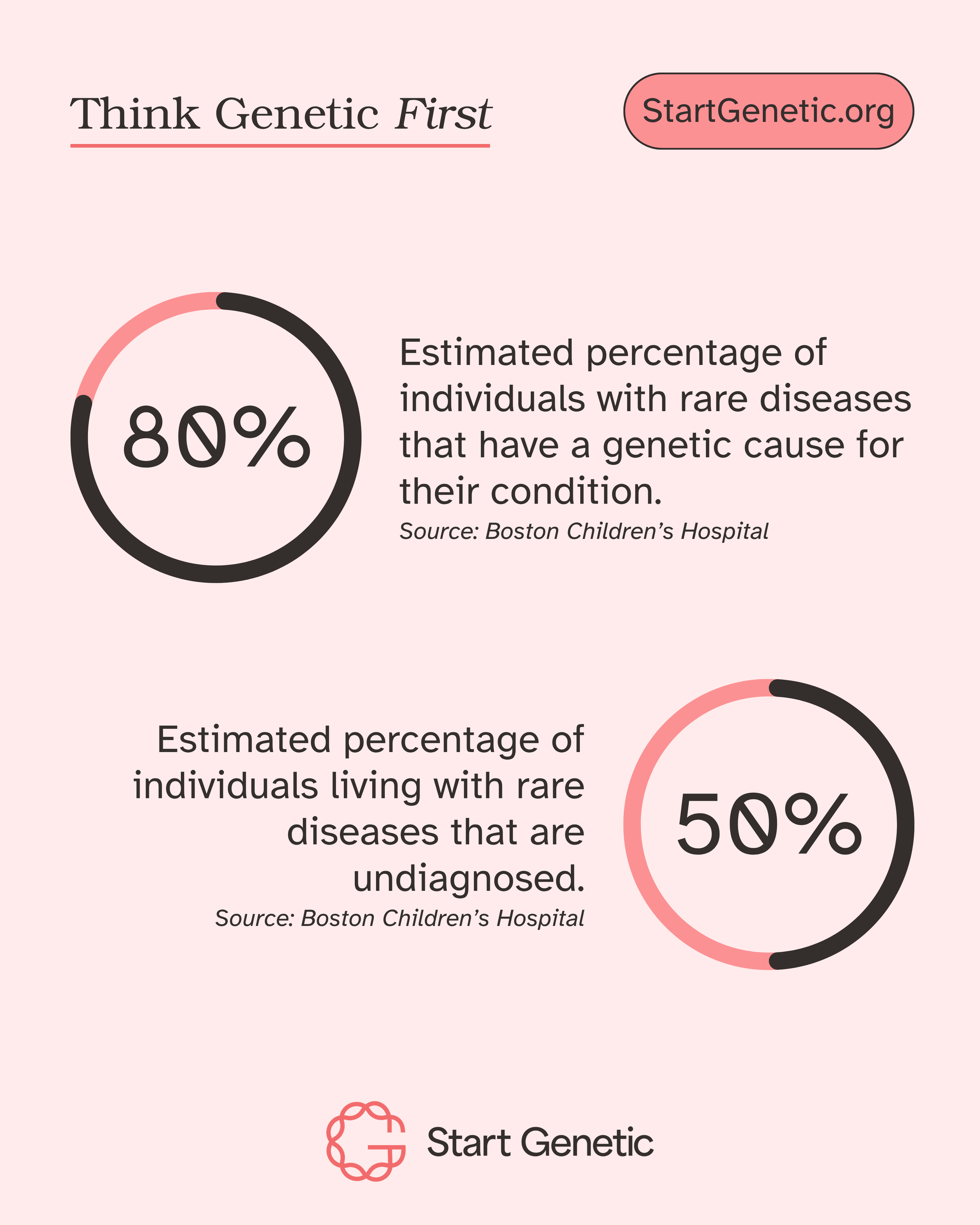
If you or someone you know has developmental delays or other unexplained symptoms, genetic testing can often identify the cause – leading to earlier treatment and better management to improve short- and long-term outcomes. With genetic insights, you and your healthcare team can make more informed decisions to help you or your loved one live the healthiest, fullest life possible.
A diagnosis. A community. A path forward.

Benefits of Genetic Testing
Genetic testing can empower you with information you can act on.
-

Know Your Diagnosis
Genetic testing can identify the cause of symptoms and provide clarity for families seeking answers.
-

Guide Your Care
A genetic diagnosis can help doctors tailor care and connect families with treatment and research opportunities.
-

Access Vital Support
A diagnosis can connect families with trusted information, support resources, and a community that understands their journey.
-

Inform Health
Genetic testing can help individuals and families better understand health risks and make informed decisions about care.
-

Advance Understanding
A genetic diagnosis can open doors to research studies, clinical trials, and emerging treatment opportunities.

Who Should Consider Genetic Testing?
WHO IT CAN HELP
Everyone with a genetic disease deserves to have answers. Genetic testing can accelerate the process and is often more accessible than families think, either through insurance or other programs.
Who Should Consider Genetic Testing?
Genetic testing can provide insights and knowledge that everyone can benefit from. We especially recommend genetic testing for the following:
Babies and kids who are very ill in the hospital, such as in the NICU or PICU
People who have two or more of the following symptoms:
Difficulty eating or feeding
Problems moving or involuntary movements
Difficulty with vision
Growth that’s much slower or faster than other children (e.g. height, weight, or head size that is way below or above average)
Muscles that are stiff or too floppy
People who experience:
Autism
Delayed learning or development
Seizures
Birth defects such as a hole in the heart or extra fingers and toes

Previously tested? New advances mean new possibilities.
Genetic testing and science is always advancing. Newer tests may identify genetic changes that older tests could not. If the above symptoms match your or your loved one’s experience, it’s a good idea to discuss genetic testing with your doctor – even if you’ve had testing done before. Talking with your doctor or a genetic counselor can help you decide if updated testing may help.
Diagnosed and still seeking answers?
Even if you’ve already been diagnosed with a condition, genetic testing can still help to:
Explain the exact genetic reason behind your health challenges
Allow your healthcare team to create a personalized treatment plan for you
Find treatments specifically created for your condition
Connect you with a community of people with shared experiences